
Built-in Chip Scanner
NFC Chip Scanner for Luxury Bags
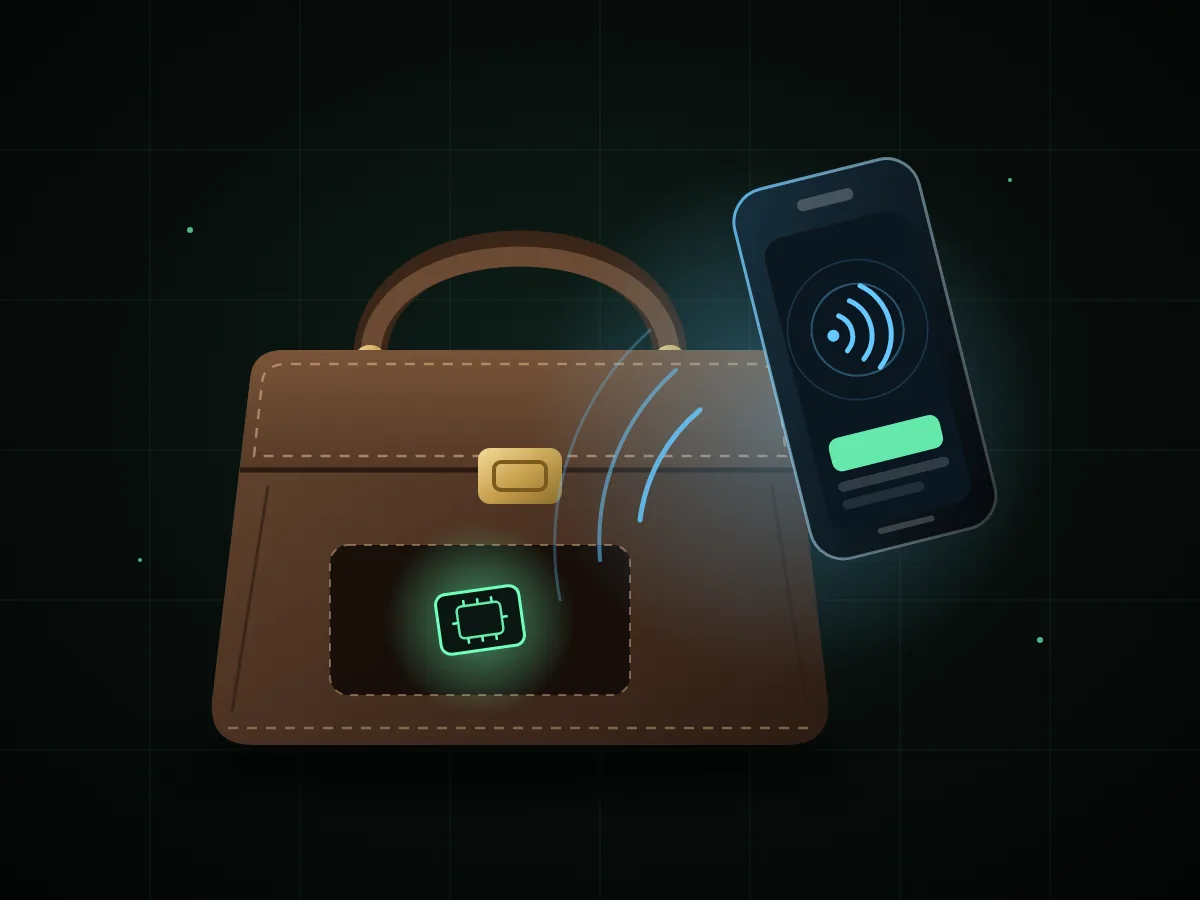
Vereev's built-in chip scanner lets you hold an iPhone or Android phone near the NFC chip in a luxury bag and see what the chip makes readable: its chip type, its identifier and any public records, such as a web address. A chip is not proof on its own. Chips can be protected, moved or copied, so Vereev treats a scan as one more piece of evidence next to photos of the bag itself.
Updated
- Reads compatible NFC chips on iPhone and Android
- Shows the chip type, identifier and readable records
- Opens nothing: web addresses are shown as plain text
- One layer of evidence, never a verdict on its own
What is the NFC chip in a luxury bag?
NFC, short for near field communication, is a short-range wireless technology. An NFC chip, often called a tag, has no battery of its own. A phone held a few centimeters away powers the chip and reads what it stores, usually an identifier and sometimes a short message or a web address.
Luxury houses have started to sew or embed these chips into their products to support their own authenticity and ownership services. What a chip does depends on the brand, the product and the year it was made:
- Louis Vuitton: resale specialist Lollipuff reported in 2021 that, from March 2021, many Louis Vuitton bags and accessories no longer come with a date code and carry a microchip instead, which the house is expected to verify in-house.
- Chanel: resellers reported in 2021 that, from 21A serial numbers onward, a microchip replaced the authenticity card and the hologram sticker inside the bag, and that a Chanel boutique can scan it.
- Gucci: an NFC Authenticity Tag on selected products, read through the Gucci Tag section of the Gucci app.
- Prada: NFC tags built into its products, placed differently by category, and a Digital Certificate of Ownership for select products through the Aura Blockchain Consortium.
- Maison Margiela: its parent group OTB said every garment and accessory from the Fall/Winter 2024-25 collections would carry an NFC chip that opens a digital authenticity certificate on a smartphone.
- Moncler and Rimowa: NFC tags on newer Moncler garments, checked at code.moncler.com, and on Rimowa suitcases bought from January 1, 2023.
Many genuine bags have no chip at all, especially those made before a brand adopted the technology. A missing chip, or a chip that does not respond, is not proof of a fake.
How Vereev's built-in chip scanner works
The Built-in Chip Scanner is part of the Vereev app for iPhone and Android. It uses your phone's NFC reader to detect a chip, connect to it and read what the chip makes available, then shows the result on your screen.
It works with chips that follow the ISO/IEC 14443 and ISO/IEC 15693 standards, which cover most NFC tags used on products, and it decodes NDEF, the NFC Forum's standard format for tag messages. Text records appear as text. Web addresses appear as plain text and are never opened automatically, so you can see where a tag points before you visit anything. Other record types appear as raw bytes.
The scanner only reads. It does not write to the chip, change it or unlock protected brand data, and the scan result is not added to an authentication request automatically.
How to scan a bag's chip with your phone
- Open the Vereev app and choose Built-in Chip Scanner from your profile.
- Take bank cards, transit cards and other tagged items out of the bag. If your phone detects more than one chip, the scan stops.
- Tap Scan Now and hold your phone close to the inside of the bag: the top edge of an iPhone, or the back of an Android phone, where the NFC antenna usually sits. On Android, NFC must be turned on in your settings.
- Move slowly over the interior label, the lining and the pockets. Once the chip is detected, hold the phone and the bag still.
- Read the result. Take a screenshot if you want to keep it with your purchase records.
What the scanner can show you
- Chip technology
- The standard the chip uses, such as ISO 14443, including MIFARE chips, or ISO 15693.
- Chip identifier
- The chip's identifier in hexadecimal. It identifies the chip, not the bag, and identifiers can be copied.
- NDEF status and capacity
- Whether the chip offers NDEF data, whether it is locked against changes, and how much data it can hold.
- Readable records
- Text and web addresses the chip makes public, shown as plain text, plus the size of each record.
- Protected chips
- Many brand chips keep their records protected. Then the scanner shows only the chip type and identifier. Louis Vuitton product records, for example, may be protected.
Why a chip alone can't prove a bag is real
A chip is a separate component. It can be cut from a genuine bag and placed in another one, and counterfeiters can add tags of their own. In 2020, reports on a counterfeit network broken up in China said its fake Louis Vuitton bags carried NFC tags that opened the official Louis Vuitton website when scanned, a feature the genuine bags did not have at the time.
The opposite mistake matters too. Bags made before a brand adopted chips have none, and a chip can be damaged or switched off. Prada, for example, says its NFC tag can be irreversibly deactivated.
A successful scan tells you that a chip responded and what it shared. It does not tell you that the chip belongs to this bag, or that the bag is genuine.
Do QR codes and NFC tags prove authenticity?What still decides whether a bag is authentic
Authentication rests on the bag itself, compared with references for the exact model and period:
- Shape, proportions and construction, including stitching, edge finishing and how panels are joined
- Materials: leather, canvas, lining and how they have aged
- Hardware, zippers and engravings
- Heat stamps, labels and serial or date information where the model has them
- Packaging and documents, which support the bag but can be copied or moved
- The seller's history and the purchase records
Clear, complete photos make that comparison possible. The Vereev bag photo guide shows every angle a reviewer needs.
Bag photo guide with sample photosHow a chip scan fits into a Vereev authentication
Scan first to see whether a chip responds and what it shares. Where a brand runs its own check, such as the Gucci app for Gucci tags or code.moncler.com for Moncler, run that check as well and confirm that the product it shows matches the bag in front of you.
Then authenticate the bag itself. In the Vereev app, choose the brand, follow the photo guide and submit your photos. Vereev combines AI-assisted image analysis with review by certified authenticators, and eligible completed reviews include a verifiable E-Result and a digital Certificate of Authenticity.
If the chip will not read, or the chip result and the bag disagree, the review of the bag is where the answer comes from.
Scan the chip, then authenticate the bag
Download Vereev to use the Built-in Chip Scanner and submit your bag for a documented authentication.
Frequently asked questions
Can I scan an NFC chip in a luxury bag?
Often, yes. If the bag has a chip that follows a common NFC standard and your phone has NFC, Vereev's Built-in Chip Scanner can detect it and show what it makes readable. Many bags have no chip, and some chips keep their data protected, so results vary by brand and model.
Does an NFC chip prove a bag is authentic?
No. A chip can be moved from a genuine bag to a fake one, and counterfeiters have added tags of their own. A chip result is one piece of evidence. The bag's construction, materials and markings decide whether it is authentic.
How do I check an NFC-enabled designer bag?
Scan the chip to see what it shares, use the brand's own check where one exists, and make sure any product details shown match the bag. Then check the bag itself, or submit photos to Vereev for authentication.
Can my iPhone scan a luxury bag NFC chip?
Yes, an iPhone with NFC can read compatible chips through an app such as Vereev. Open the Built-in Chip Scanner, tap Scan Now and hold the top edge of the iPhone close to the chip, keeping the bag still until the chip is detected.
Can Android scan a luxury bag NFC chip?
Yes, if the phone has NFC and it is turned on in your settings. Open the Built-in Chip Scanner in Vereev and hold the back of the phone, where the NFC antenna usually sits, close to the chip.
What does an NFC chip tell me about a designer bag?
That depends on the chip. Vereev shows the chip type, its identifier and any readable records, such as text or a web address. Brand chips often keep their records protected, and then you see only the chip type and identifier.
Where is the chip in a Louis Vuitton bag?
Louis Vuitton does not publish where its chips sit, and the position varies by model. Move your phone slowly over the inside of the bag, including the pockets and lining. If nothing is detected, the chip may be out of range, protected or absent, which on its own says nothing about authenticity.
Can Vereev authenticate bags with NFC?
Vereev authenticates bags from photos, combining AI-assisted image analysis with certified authenticators. The Built-in Chip Scanner is a separate tool in the app that shows what a chip makes readable. Use both: scan the chip, then submit the bag for authentication.
How do I check if a designer bag is real?
Identify the exact model and period, then compare shape, construction, materials, hardware, stamps and labels with references for that model. Packaging, receipts and chip results support the bag but cannot replace it. For a documented result, submit photos through the Vereev app.
Can fake bags contain NFC chips?
Yes. In 2020, reports on a counterfeit network in China said its fake Louis Vuitton bags carried NFC tags that opened the official Louis Vuitton website when scanned, a feature the genuine bags did not have at the time.
Is NFC authentication enough to verify a luxury bag?
No. NFC can support a brand's own ownership or certificate service, but a tag can be separated from the product it came with. Treat it as one layer of evidence and check the bag itself.
Keep checking your bag
- Handbag authentication
- Designer authentication
- Bag photo guide with sample photos
- Do QR codes and NFC tags prove authenticity?
- Gucci authenticity tag, NFC and QR codes
- Moncler QR code and NFC label
- Rimowa NFC tag and Ownership Certificate
- AI-assisted authentication
- Real vs fake comparisons
- How Vereev authentication works
Bag authentication guides by brand
Sources
- Apple Developer: Core NFC documentation
- Lollipuff: Louis Vuitton to Replace Datecodes with Microchips (May 27, 2021)
- Lux Second Chance: Chanel Ditches Their Authenticity Cards for Custom NFC Microchips (September 13, 2021)
- Gucci: NFC Authenticity Tag
- Prada: authenticity FAQ
- OTB: digital authenticity certificates for Jil Sander, Maison Margiela and Marni
- Moncler: code.moncler.com
- Rimowa: NFC tag and Ownership Certificate FAQ
- The Fashion Law: A Louis Vuitton Employee is at the Center of $15 Million-Plus Counterfeit Bust (September 7, 2020)
- Securing Industry: Chinese police bust fake Louis Vuitton bag network